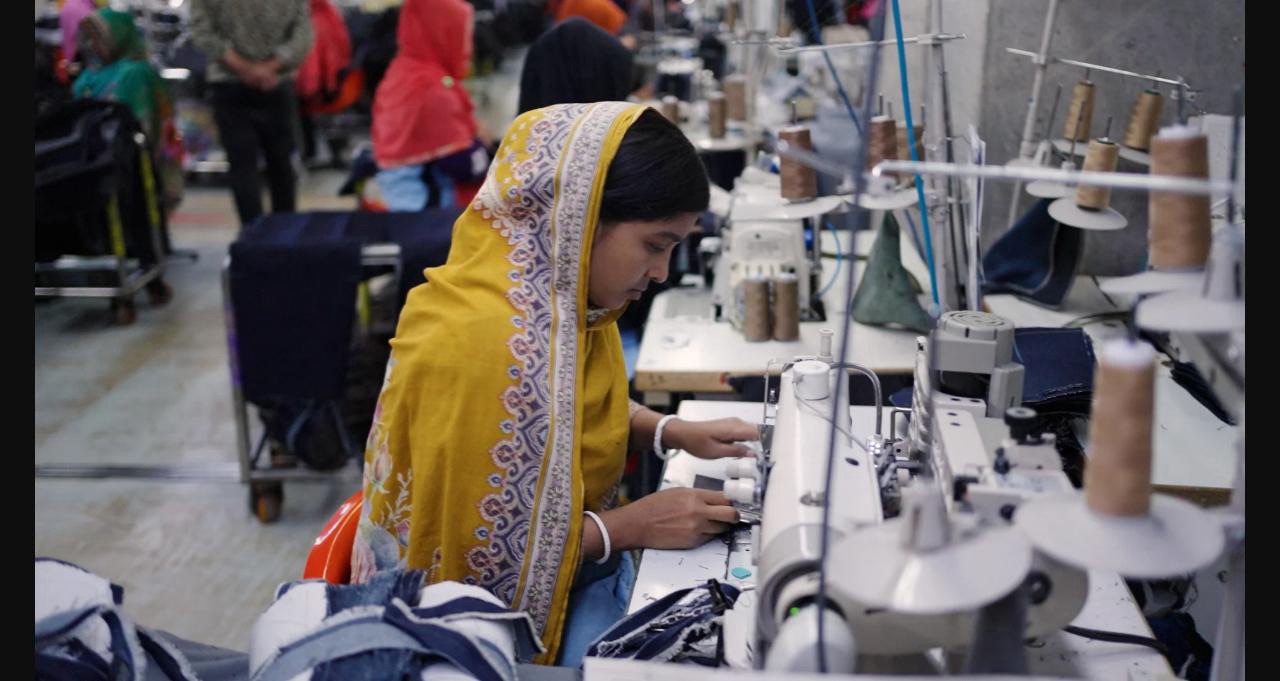
Violence has flared across Bangladesh’s vital textile hubs as nearly one million garment workers abandoned their posts, forcing the closure of at least 529 factories. The mass strikes erupted into pitched battles between demonstrators and security forces on November 1, 2026, threatening severe gridlock for the world’s second-largest clothing export industry.
The Core Conflict: A Battle for Survival
The crisis stems from a widening chasm between current entry-level wages and a punishing surge in inflation.
• The Workers’ Demand: Trade unions and employees are demanding a minimum monthly entry-level wage of 30,000 Bangladeshi Taka ($242 USD).
• The Current Reality: The baseline monthly wage remains pinned at 12,500 Taka ($101 USD), a rate established in late 2023.
• The Root Cause: Striking workers cite skyrocketing expenses for essential food, rent, utility bills, and healthcare, stating that basic legal minimums have completely unraveled their real purchasing power.
Streets Erupt in Clashes
Despite a rapid midday intervention by the interim administration to establish a six-member minimum wage board, tens of thousands of workers continued blocking major industrial arterial corridors.
In the Mirpur sector of the capital, protesters erected blockades across prominent intersections, freezing local morning transit. Clashes escalated when a police vehicle and a local security box were set ablaze. Law enforcement units deployed batons, water cannons, tear gas, and sound grenades to push back crowds throwing bricks. In response, commuter rail authorities were forced to halt operations at multiple Mirpur metro stations for several hours.
The unrest spread aggressively northward into major manufacturing districts, including Gazipur, Ashulia, and Savar. Stick-wielding crowds blocked the critical Dhaka-Tangail highway, a primary economic lifeline. The scale of the threat forced the deployment of paramilitary Border Guard Bangladesh (BGB) units to protect factory perimeters.
Industrial Region Affected Factories Workers Displaced / Striking
Gazipur & Mymensingh 276 factories closed 645,360 workers out
Savar, Ashulia & Jirani 185 factories closed 290,205 workers out
Dhaka Metro (Mirpur) 68 factories closed 51,625 workers out
Political Fallout and Foreign Instigation Allegations
The industrial crisis poses a severe economic test for the newly elected government under Prime Minister Tarique Rahman, whose administration secured its mandate in national elections earlier this year.
Addressing reporters after an emergency late-night briefing with the Prime Minister, Home Minister Salahuddin Ahmed alleged that the labor movement has been infiltrated by third-party political agitators. Police reported detaining 19 individuals in Mirpur, claiming they were operatives of the banned Awami League and Chhatra League groups posing as workers to engineer civil instability.
Furthermore, Home Minister Ahmed directly alleged that elements “across the border” were stoking the unrest to damage Bangladesh’s production capabilities and divert key western apparel buyers.
Global Supply Chain Implications
The total disruption has paralyzed 987,190 factory workers. The ready-made garment (RMG) sector represents over 80% of Bangladesh’s entire export revenue and fuels roughly 10% of the country’s GDP.
Labour and Employment Minister Ariful Haque Chowdhury issued an urgent plea for workers to return to the production floor while the newly formed wage panel carries out its review. Chowdhury explicitly warned that ongoing production freezes risk missing critical shipping deadlines, which could trigger immediate payment defaults from premier international clothing brands and inflict permanent damage on the economy.